Home › Services › Sewer Line Repair & Replacement
Most homeowners call about a single slow or backed-up drain, and often that's all it is. But when the trouble keeps coming back, moves between fixtures, or shows up in the lowest drains in the house — a downstairs toilet, a tub, a floor drain in the garage — the real issue is usually the main sewer line that carries everything out to the city connection. A clog you can plunge or snake is a fixture problem. A line that backs up again a week later, or every time you run the washing machine, is a sewer-line problem, and clearing it over and over just delays the actual fix.
Sewer-line failures don't fix themselves and they rarely stay small. A hairline crack lets in roots; roots trap waste and grow into a full blockage; the trapped water works on the crack until a section collapses. Catching it at the camera-inspection stage is the difference between a targeted repair and an emergency dig. That's why a sewer job should start with actually seeing the inside of the line rather than guessing from the symptoms.
The same drain clogs again days or weeks after being cleared — the sign of a line problem, not a fixture clog.
Flush a toilet and the shower gurgles, or the tub backs up when the washer drains — everything shares the failing main line.
Odor near floor drains or a patch of soggy, unusually green lawn can mean the line is leaking underground.
Air trapped by a partial blockage downstream of every fixture.
A cracked line can become an entry path for pests following the odor.
In slab homes, a broken under-slab line can surface as unexplained moisture or a warm/wet spot on the floor.
Sugar Land sits on the expansive clay soils common across the Gulf Coast, and that soil is hard on buried pipe. Through Houston's cycle of drought and heavy rain, clay swells when wet and shrinks when dry, and that constant movement stresses sewer lines until joints separate or cracks open. In the region's older, established neighborhoods — Sugar Creek, First Colony, Covington Woods, and similar areas — the original sewer piping is often cast iron or clay that's now decades past its prime, corroding from the inside and cracking from soil movement outside. Once a crack forms, the water-seeking roots of the mature live oaks and pines those neighborhoods are known for find their way in and turn a small fault into a full blockage.
Newer construction across Fort Bend County isn't immune either. Rapid growth means lines laid through fill that can settle unevenly, and even modern PVC can be crushed or offset by shifting soil or improper bedding. Wherever your home falls on that spectrum, the diagnosis is the same: look inside the line before quoting a repair, because the cause dictates the fix.
Every sewer job should start with a waterproof camera run down the line, so you can see exactly what's going on. The camera shows the type of pipe, its condition, where the fault is, and how far down the line it sits, often with a locator that marks the spot on the ground above. That means no exploratory digging and no guessing — the footage tells the difference between a soft blockage that just needs clearing, a root intrusion, an offset joint, a crack, or a fully collapsed section. If you're buying a home in an older Sugar Land neighborhood, a pre-purchase camera inspection is one of the smartest few-hundred-dollar decisions you can make, because a bad sewer line is one of the most expensive surprises a house can hide.
When the inspection shows the line is structurally sound but choked with grease, scale, sludge, or fine roots, hydro jetting is usually the right tool. A high-pressure water jet scours the full inside diameter of the pipe clean — far more thoroughly than a cable snake, which punches a hole through a clog but leaves the buildup on the walls. Jetting is especially useful for recurring grease clogs and for clearing root hairs out of a line before a repair. It's not a fix for a broken pipe, though, which is exactly why jetting should only follow a camera run confirming the line can take it.
Once we know what's wrong, there are three general paths, and we'll walk you through which one fits your line:
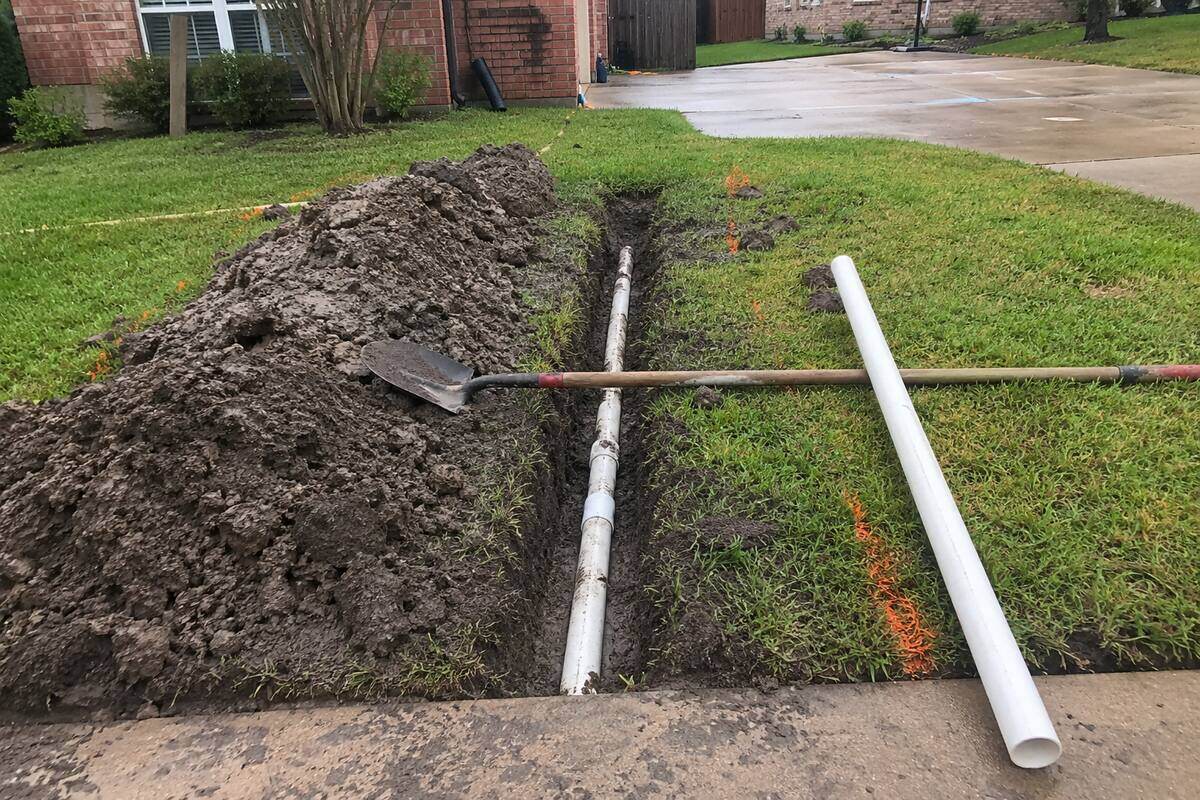
For an isolated break, crack, or offset joint in an otherwise healthy line, just that section gets excavated and replaced — the least invasive, lowest-cost option when the rest of the pipe is sound.
For a line that's failing along its length but still has a usable path, trenchless methods rehabilitate or replace it through small access points instead of trenching the whole yard.
For a collapsed line, severe root damage, or one that needs re-routing, a conventional replacement is the durable, correct answer — and the site is restored afterwards.
Whichever path applies, you get a firm, itemized price after the inspection — never a number pulled out of the air before anyone has looked inside the pipe. And because a broken sewer line under a slab can involve permits and licensed work, you're dealing with real licensed plumbers, not a drain-cleaning outfit that disappears when the job gets complicated.
A one-off clog usually clears and stays clear. A failing sewer line comes back — repeated backups in the lowest drains, multiple fixtures draining slowly at once, gurgling toilets, or sewage smells in the yard. The only way to know for sure is a camera inspection, which shows exactly what's happening inside the line and where.
Often, yes. Isolated breaks or root intrusions can sometimes be fixed with a spot repair, and many full-line failures qualify for trenchless replacement, which needs only small access points instead of an open trench. We confirm which options apply after a camera inspection.
Two reasons. Older sections like Sugar Creek and First Colony were built with cast iron or clay sewer piping that's now decades old and corroding or cracking. And the region's expansive clay soil shifts with wet-and-dry cycles, stressing buried lines and opening cracks that tree roots then invade.
It depends on the length of line, the depth, whether it's a spot repair or full replacement, and whether trenchless is an option. A camera diagnosis comes first, so you get a firm, itemized price before any work starts — never a guess.
Camera diagnosis, honest options, and a firm price before any digging. Serving Sugar Land & Fort Bend County.
Call (832) 742-6263 Sugar Land