Home › Re-Piping
Multiple unrelated leaks in a short span usually means the whole system is reaching end of life, not just one bad section.
Rusty or brown water, especially right after the water's been off, points to corroding galvanized pipe.
Corrosion narrowing pipe diameter over decades gradually chokes flow at every fixture.
Common in homes built in the late 1980s through mid-1990s — a material now known to fail at fittings over time.
Greenish or white corrosion at exposed fittings in a crawlspace, attic, or garage is a visible warning sign.
If slab leak repairs keep recurring, above-slab re-routing is often more cost-effective long term.
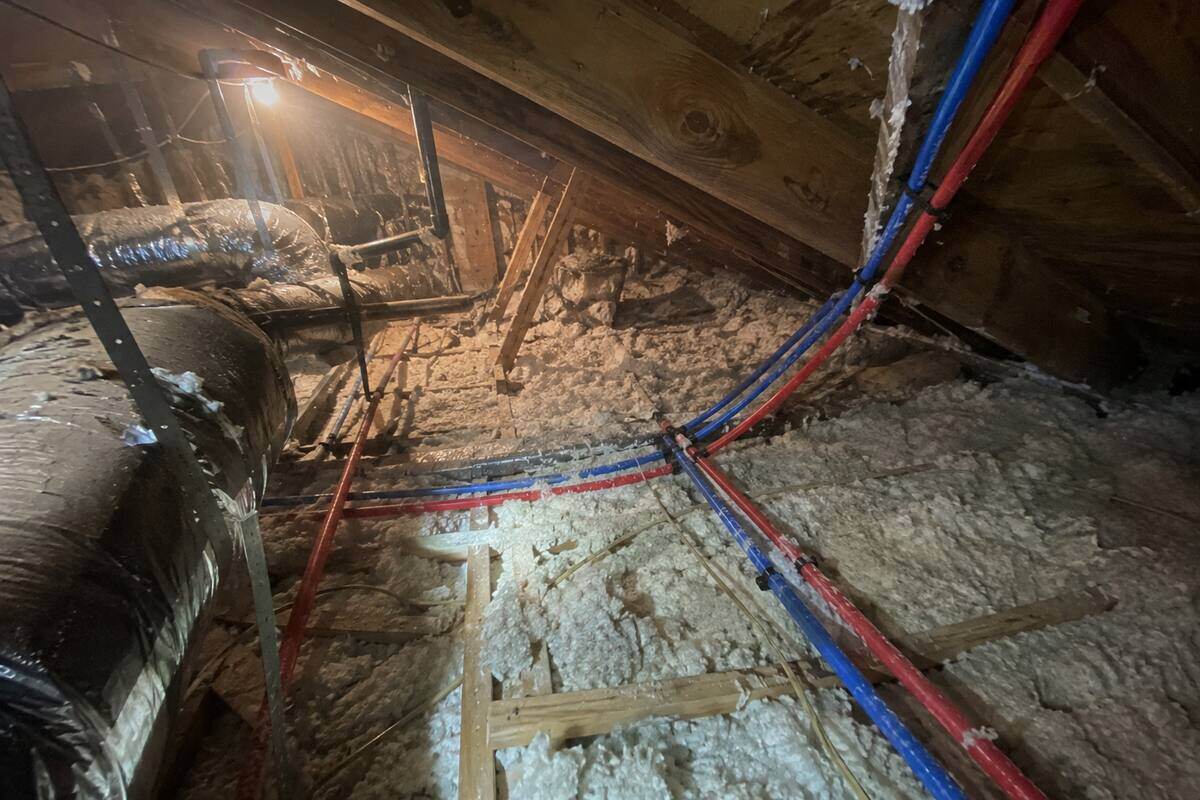
Piping risk in Sugar Land tracks closely with build era. Homes in the older sections of First Colony (dating to 1977) and parts of New Territory and Commonwealth from the 1980s and 1990s are the most likely to still have original galvanized steel or polybutylene piping reaching or past its practical lifespan. Newer construction in Telfair, Riverstone, and Sienna typically used copper or PEX from the start, which is far more resistant to the corrosion and fitting failures that drive most re-piping decisions — though installation-related leaks can still happen in any home regardless of age.
Re-piping is also the permanent alternative to repeated slab leak repairs: rather than detecting and patching leaks one at a time in a slab-run system, new supply lines can be rerouted through the attic or walls, avoiding the slab entirely. See our slab leak page for more on how that comparison works for your specific situation.
Most homes take a few days depending on size and layout. We walk you through the schedule and what to expect before work begins, including which areas of the home will be affected each day.
Usually not — water is typically off for portions of each day but restored by evening, and most homeowners stay in the home throughout the project.
Both are solid modern choices. PEX is more flexible, more tolerant of soil and structural movement, and typically less expensive to install. Copper has a longer track record and some homeowners prefer it for that reason. We'll walk you through the tradeoffs for your specific home.
Some access points are usually necessary, patched and left ready for paint at the end. You'll be told exactly where access will be needed before starting, no surprises mid-project.
Get an honest assessment of whether repair or re-piping makes more sense for your home.
Call (832) 742-6263 Sugar Land